Are you interested in playing badminton*? Have you experience of playing on court and have a decent understanding of the rules of play? Why not come and join one of our sections and spend an evening having fun and using your skills with a group of friendly badminton players?
Are you wanting to play for fun? Maybe you played a number of years ago and want to rediscover those dormant skills. Maybe you’ve been playing for a while, possibly with friends, and you want a bigger challenge but still keeping things light. Well that’s where the General Section comes into play. We’re here to take the games kind of seriously but keeping it fun.
Are you a more experienced player who is at a higher intermediate level who wants competitive games but still with a relaxed atmosphere and not the pressures of serious competition? Then the Advanced Section is ideal for you. A friendly group who like competitive games to show off their skills but still keeping things more as a hobby and fun.
Are you an elite player keen to play within the Bristol and Avon leagues? Do you have what it takes to compete at a very high level consistently and wish to get to know other likeminded players? Well this is where our Top section, Beaufort Park comes in. This section has a fantastic group of welcoming players always on the look out for other league standard players to join them for their matches and help keep them as one of the top clubs in the area.
Do you have a child that is interested in starting? Maybe they play a bit in the garden or have done so at school. Well we have a Junior Section with a highly skilled and successful coach that would be happy to help your child get to grip with the basics and take them through to competition level, if they have what it takes.
So, why not get in touch with the section you think is the most appropriate and arrange to come and join us to get a feel of the club and to understand where your skillset is most suited.
We look forward to seeing you soon!
* Please Note: We do not accept complete beginners or fairly new novices. We don’t coach players and for the fairness of existing players, who still want fun and competitive games, we cannot accept players who can’t play at a competent standard. Thank you for your understanding.
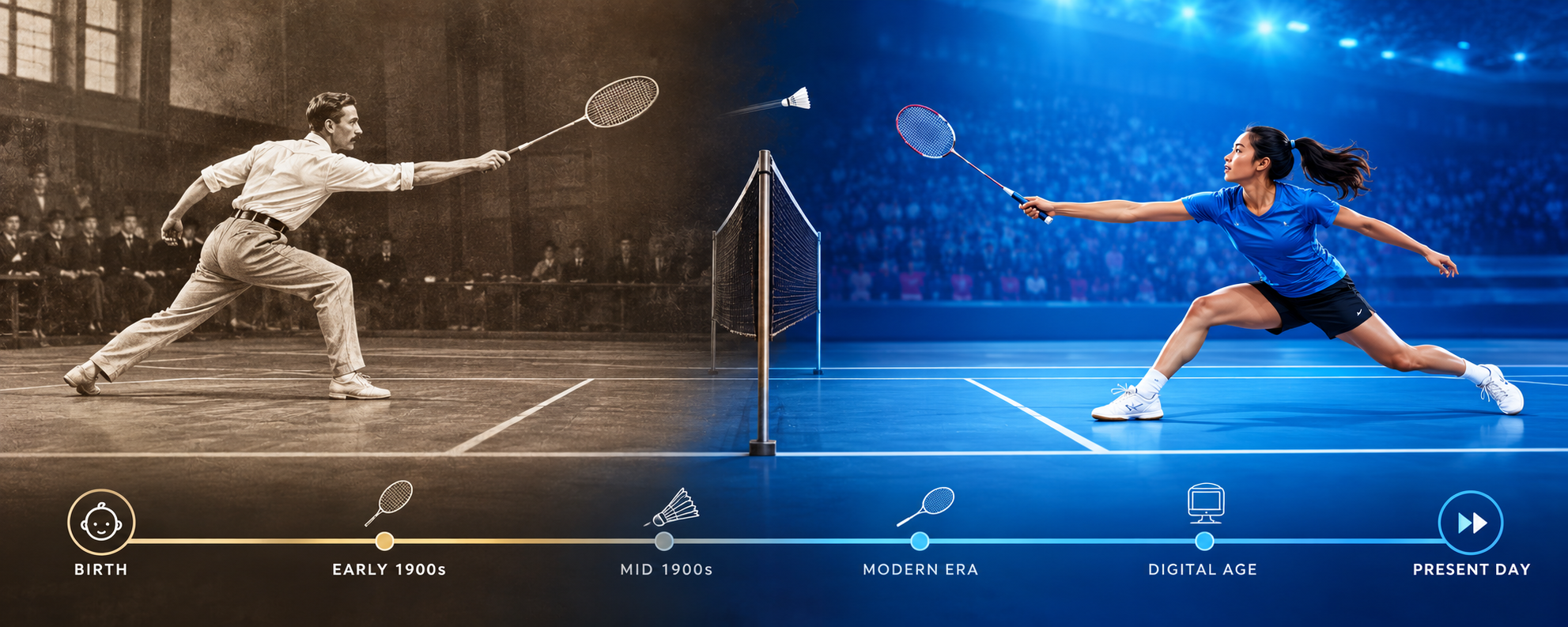
Beaufort Badminton has been around for well over 100 years and is one of the oldest active clubs in Bristol and the country. A lot has happened and changed in that time but the club keeps going from strength to strength and focuses on inclusivity and a high standard of playing across all it’s sections.
The website was also starting to look a bit old so we’ve given it an overhaul and are still updating parts of it.
The Club
General Section
This is the main hobby section of the club where people come together for the enjoyment of playing badminton and doing so in a relaxed and welcoming atmosphere. We have people from all walks of life coming together and playing and often having a laugh at the “highly skilled” shots that regularly occur usually following a “thud” sound from the racket.
This section allows players to join who have less experience with playing but there is still an expectation of competency within the sport and so total beginners and less experienced novices are unfortunately not suited to play.
Advanced Section
This is still predominantly a hobby section but caters for players that are generally more skilled, though some Advanced players do also play in the General section, who are looking for a consistently higher standard of play. As welcoming and inclusive as the General section but much more focused on competition and developing their skills.
To join this section you do need to be a higher intermediate player who can perform consistently and who is wanting more serious gameplay
Beaufort Park – Top Section
Beaufort Park is the highest standard of players within the club. This section is for the more elite players to play, with many playing within one or more of local leagues and some even playing at higher levels nationwide. The section has a mix of men’s, ladies and mixed teams and the standard across the section is extremely high.
This is a friendly group of players who are very welcoming, however to join this section you must be an advanced/elite player who takes the sport seriously.
New Site
We’ve taken a bit of time out to update the website and get it looking a little fresher and give you all the information you need before getting in touch. Take a look around, check out when and where we play and have a think about what you want from badminton and be honest about your skill level.
There’s plenty of information on here but if you need more then take a look on the relevant section page and get in touch with a representative who will be more than happy to help you out.
Hope you’ve enjoyed looking around and finding out more about one of Bristol’s oldest clubs and named after the the Duke and Duchess associated with Badminton House where it is believed the game/sport was created.
Badminton House and Estate lies in the heart of the Gloucestershire countryside and is the private home of the 12th Duke and Duchess of Beaufort and the Somerset family. The House is not normally open to the general public, it dates from the 17th century and is set in a beautiful deer park which hosts the world-famous Badminton Horse Trials.
The Great Hall at Badminton House is famous for an incident on a rainy day in 1863 when the game of badminton was said to have been invented by friends of the 8th Duke of Beaufort. We know the game of Battledore and Shuttlecock was being played at Badminton House as well as other country houses as far back as the early 1800’s. Battledore or Shuttlecock as it was sometimes called was a game where two players would hit the shuttlecock backwards and forwards to each other, counting how many times they could do this without it falling on the floor. The Battledore bats had fine leather covered shafts, almost circular heads and instead of having strings the heads are covered in vellum.
Shuttlecocks at this time would almost certainly have been made of chicken feathers pushed into cork and would have been twice the size and weight as we know them today.
On that rainy day in 1863 one of the guests had the idea of putting some string across from the door to the fireplace in the Great Hall and hitting the shuttle over the string to each other.
The Great Hall at Badminton House is the same size as the badminton court as we know it today, 44 feet (13.4m) by 20 feet (6.09m).
In 1903 the first international badminton match was played in Dublin between Ireland and England. England won 5-2.
Only four countries have won the Thomas Cup (world men’s team championships) since its inception in 1948: Malaysia, Indonesia, China and Denmark. Only four countries have won the Uber Cup (world women’s team championships) since its inception in 1956: USA, Japan, China and Indonesia.
The Start of the Badminton Association
Founded originally as the “Badminton Association”. In August, 1893 Major, later Colonel, S.S.C. Dolby, Hon Secretary of the Southsea Badminton Club, wrote to all the known badminton clubs, and also put a notice in “The Field” paper, that “A meeting is to be held at Dunbar, Waverley Grove, Southsea near Portsmouth at 2-00 p.m. on September 13th 1893 for the purpose of forming a “Badminton Association”.
The nine clubs at the meeting unanimously resolved to form a Badminton Association, and 14 mostly from Hampshire, Sussex and Devon area, joined the Association in the first year. The meeting framed and approved rules for both for the Association and for the game of badminton.
The Badminton Association was founded and it would be the first Badminton Association in the world. Col Dolby was elected both Hon. Secretary and Hon. Treasurer until he resigned in 1899 and was also the first President from 1893 – 1898, the committee comprised mostly of military gentlemen.
Prior to the formation of the Badminton Association in 1893 clubs were playing the game in various forms, without any generally recognised code of laws. There was certainly a printed code, which, with occasional modifications, was observed at some of the bigger clubs; but in most places, local rules were quite different to those observed elsewhere. Even such essential details as size of the court and height of the net varied enormously. Most clubs used the space available for their courts which meant that some courts were almost twice the size as we know them today. Under such conditions, it was impossible for the game to develop to any extent as players moving from one club to another found themselves participating in practically a new game, while interclub matches were hampered by the difficulty of recognising the diverse rules of the opposing teams. Bringing the clubs into line regarding the laws of the game was by no means easy, not unnaturally each club considered its own rules to be the best.
The Badminton Association was originally based on clubs in the Hampshire, Sussex and Devon area, but the game soon spread to other areas, especially London, another growth area was the North West. In the years up to the First World War, the number of clubs through various tournaments and competitions were authorised including the London league which was running successfully by 1901.
Ireland in 1899 and then Scotland in 1911 formed their own associations/unions then Wales in 1928. But they, like clubs worldwide, affiliated to the Badminton Association. The first foreign club to do so was that run by Baron von Maltzhan at Hamburg Spa. Then, as the games spread, individual clubs in Canada and Australia, New Zealand and USA, and later still overseas nations: France and New Zealand. Right up to 1934 the Badminton Association was responsible for writing and reviewing the laws of the game of badminton.